
Africa’s startup ecosystem has expanded significantly over the past decade, attracting global venture capital and producing an increasing number of technology ventures across sectors such as fintech, climate technology, and logistics.
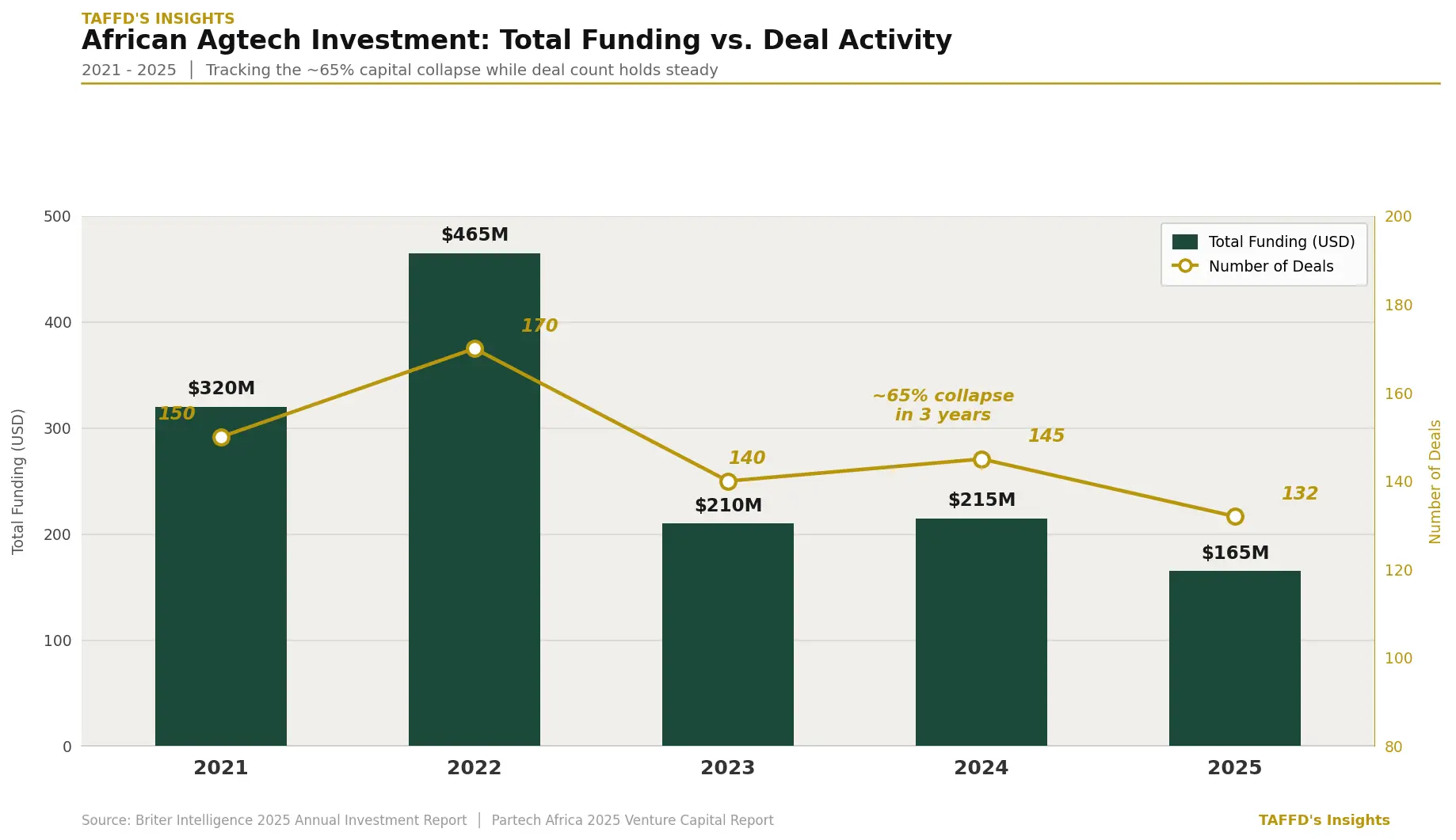
According to the Africa Investment Report 2025 by Briter Bridges, African startups disclosed approximately $3.8 billion in funding in 2025, marking a rebound in investment activity after the post-2022 slowdown.
Yet the same data reveals another pattern: capital remains highly concentrated geographically. South Africa captured about 32% of total funding, followed by Kenya at 29%, Egypt at 15%, and Nigeria at 8%.
This concentration highlights an important structural dynamic in Africa’s innovation economy. Startup ecosystems tend to cluster in a small number of markets perceived as safer for investors and founders.
But this raises a deeper question.
Can startup ecosystems scale sustainably if the systems surrounding them remain unstable?
Across many African markets, three structural forces continue to shape entrepreneurial risk:
- infrastructure instability
- regulatory unpredictability
- currency volatility
These factors rarely dominate startup headlines, yet they often determine whether innovation can survive long enough to scale.
Infrastructure instability
Technology companies depend on digital infrastructure, but they also rely on physical systems like electricity, logistics networks, broadband connectivity, and financial infrastructure.
In many African economies, these systems remain unevenly developed. Startups frequently compensate through private solutions such as generators, redundant internet connections, or outsourced logistics networks.
While such workarounds enable innovation to emerge, they also increase operational costs and uncertainty for early-stage companies.
When infrastructure risk becomes embedded in everyday operations, startup ecosystems may grow in activity but remain structurally fragile.
Regulatory unpredictability
Policy environments also shape the stability of startup ecosystems.
Across Africa, regulatory frameworks governing emerging technologies from digital payments to data governance are still evolving. As a result, startups often operate in industries where the legal environment is only partially defined.
While regulatory experimentation is common in emerging markets, sudden shifts in policy or compliance requirements can introduce significant uncertainty for both founders and investors.
Entrepreneurship thrives in environments that allow experimentation. But it scales most effectively where rules are predictable.
Currency volatility
Another structural factor affecting African startups is currency risk.
Many companies raise capital in dollars or euros while generating revenue in local currencies. When exchange rates shift significantly, operational costs particularly for imported infrastructure and global software services can rise rapidly.
Currency volatility therefore influences everything from pricing models to investor returns, adding another layer of uncertainty to startup growth.
Growth within fragile systems
Taken individually, infrastructure gaps, regulatory shifts, and currency fluctuations are manageable challenges.
Taken together, however, they form a systemic environment in which startups must constantly navigate risks beyond their control.
Despite these conditions, Africa’s startup ecosystems continue to expand. Entrepreneurs keep building companies, investors keep deploying capital, and policymakers continue experimenting with frameworks designed to support innovation.
But growth should not be mistaken for stability.
Startup ecosystems become durable not simply when companies are launched, but when the systems surrounding them gradually become less unpredictable.
A different question for Africa’s innovation economy
Much of the conversation around African startups focuses on how to accelerate company creation. More funding, more accelerators, more entrepreneurial talent.
Yet the more fundamental challenge may lie elsewhere.
What if the next phase of Africa’s startup economy is not about building more startups but about reducing the systemic risks they face?
Infrastructure reliability, regulatory clarity, and financial stability are rarely discussed as innovation policy.
But they may ultimately determine whether Africa’s startup ecosystems evolve into durable engines of economic growth.
Because ecosystems rarely fail due to a lack of ideas.
They fail when the systems surrounding those ideas remain too fragile to sustain them.